Monday, 5 January 2015

Contents of a General First Aid Kit


Contents of a General First Aid Kit

Having a well stocked, in date First Aid kit is vital to ensuring you have the right bits to help treat someone involved in an accident. There are many First Aid kits on the market, ranging from very cheap, very low quality, pretty useless £1 specials, through to medical kits that cost several hundreds of pounds.

One option is to build your own First Aid kit, and with the right contents, you too can have a First Aid kit for every eventuality.

Take a look at one of our basic First Aid Kits as shown to students on our courses:


First Aid Kit

In a Bag, to Keep it together, and dry! All contents are kept in a zip lock bag. This ensures they are kept dry, and together, all in one place!
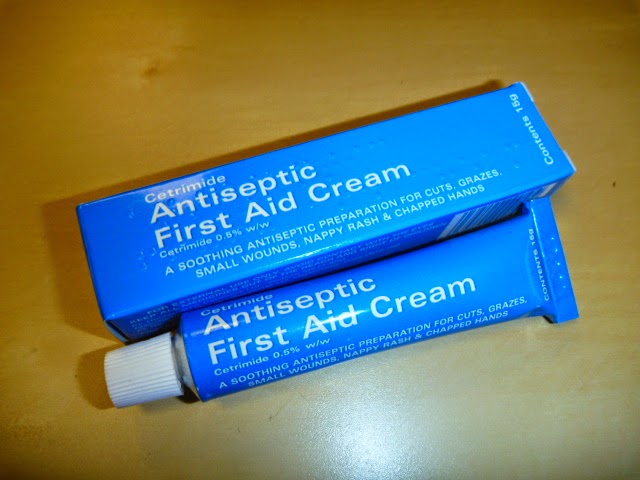
First Aid Antiseptic Cream

Antiseptic Cream. After cleaning a wound with water, this is good to prevent infection, keeping the wound clean. If this First Aid kit is used to treat others, or someone in the family is sensitive to the ingredients to the cream - it should be excluded.

Steri Strips, Plasters

Wound and Dressing closures. Washproof plasters to cover small cuts, Steri-Strips to close deeper wounds, safety pins and micropore tape to hold dressings fast in place.

Bandage, Triangular type

Triangular bandages are great, and so versatile! You can make a head bandage, or sling from one! But, with slings, be careful with the paper type of bandage, they aren't so strong, so a fabric type may be better!

Face Shield for Mouth to Mouth

Face shield. Vital to prevent cross contamination when delivering mouth to mouth resuscitation (Rescue Breaths) to a casualty. We ensure we have these in our First Aid Kits, as well as on keyrings with our keys. One is always close to hand!

First Aid Gloves

Gloves. Gloves are really important to prevent cross infection in both directions. Blood and other body fluids generally isn't the most pleasant of things to be in contact with, and more so, can contain some pretty nasty stuff such as viruses. Gloves are a quick and easy way to keep your hands free from all this whilst you treat a casualty.

Sterile wipes for cleaning wounds

Wound cleansing wipes. Alcohol Free. Great for cleaning a wound when away from water. You can gently, and under your own control, clean around a wound. Alcohol does have great cleaning properties, but when applied to a wound can hurt really badly, and also, can cause a reaction with a casualty. Sterile Water, as found on these wipes, will do just fine.

Dressings, Bandages and Pads

Assorted Dressings, Bandages, and pads. A dressing is often a bandage with a pad, whereas a bandage is a long piece of material, often woven for strength. There are many dressings / bandages, and each has it's own use. A Crepe bandage for example (Top middle) is elasticated, and this allows for swelling of the injured part, without cutting off circulation (Big problem). It's commonly used on joints, whereas other dressings can be used alone, and then bandaged over to prevent blood seepage.

A pair of Scissors and Tweezers

Tough scissors & Tweezers. A tough pair of scissors helps cut through clothing and shoe laces etc. Tweezers are so important for removing small splinters and the such - But be aware, we don't remove bits of glass, or branches from people. That foreign object may be plugging a hole where without it's presence, a whole load of blood may flow out, and we really don't want that!

Other items for a First Aid kit may include a foil blanket (Mixed reviews on these), Sterile water (Eye wash) as well as a First Aid Booklet to help guide you in an Emergency.

If you're in the car, house, or office, extra levels of preparedness are required, and you will need to think about every potential incident, then aim off for it.

All the gear is great, but, without adequate training, it may be of little or no use in an Emergency, so, consider going on a First Aid Course.

Centric runs such courses for business and private groups alike. Check us out, we're here to help!


Monday, 29 December 2014

First Aid Winter Tips!

This morning, as I opened my front door, I uttered the words.... "It's here".

Clearing the snow off our vehicles, and sliding about the place, I was reminded about all the things we must remember as winter sets in.

Winter first aid tips

From broken bones and sprains caused by slips, to the more extreme cases of hypothermia, there are lots of injuries that you or your loved ones may suffer as a result of icy weather.

A common injury is a sprain or strain which is when the soft tissues around the bone or joint become injured by violent or sudden movements. There may be pain and tenderness, swelling and bruising and difficulty moving the joint. 

Remember the word RICE:
Rest the affected part;
apply an Ice pack(wrapped in a tea towel) for 10 minutes;
give Comfortable support using padding and a bandage and
Elevate it to help with pain and swelling.

‘Sprains can be confused with broken bones (fractures), but a fracture generally requires more force. As well as swelling, bruising and pain, fractures can be suspected if you see a shortening, bend or twist in the limb. They tend to prevent the limb being used and a wound can appear where a bone may protrude. The body may also go into shock - a life threatening condition. 

If you are unsure whether it is a sprain, strain or fracture that you are dealing with then always treat it as a fracture. Keep the affected part still, support it with lots of padding and send the casualty to hospital.

At this time of year we sadly hear about cases of hypothermia. This is when the body temperature drops below 35C and is recognised by shivering with pale, cold, dry skin and symptoms such as disorientation, apathy or irrational behaviour; impaired consciousness, slow and shallow breathing and a weakening pulse. 

If you suspect hypothermia, replace any wet clothes with dry and re-warm the patient up slowly by giving them warm drinks and high energy foods such as chocolate.

Being Prepared

Prevention is better than cure! 

Sprains, Strains and Breaks can be avoided, or limited by ensuring you have the appropriate footwear on for the conditions you will experience. 

Wear sturdy footwear - even when driving, as you never know when or where you may be required to leave your vehicle. 

If you are going to be outside a lot, think about wearing broken in hiking boots (Boots that have been worn in, so are comfortable). A good pair of boots will turn a break into a Strain / Sprain, and a Strain / Sprain into nothing. 

Think about anti slip attachments for shoes that fit over for walking on snow. 

Stock your vehicle with blankets, food, a torch, and a good first aid kit. Consider taking a flask of warm drink (Non alcoholic!). Ensure your mobile phone is fully charged, and people know where your going when you leave.

Keep a storage of food at home, help elderly relatives and friends by shopping for them, or arranging a delivery of supplies from retailers who deliver.


Being prepared also involves learning First Aid. There are many great organisations out there with voluntary schemes for training, such as the British Heart Foundation Heartstart scheme. HSE compliant First Aid Courses are also a good idea, which are more in depth, and you get an accredited qualification from it too! 

For more information, go online to: www.centricuk.com 

Monday, 1 December 2014

The meaning of life, Christmas, and Mental Health

Monty Python holds its own opinion!

"The meaning of Life" (What is) is a question which people have struggled with for millennia.

It can only be answered with opinion, as the meaning alters per individual. Those with faith could assign the meaning to a life of service to their God, others still, may not be able to answer the question fully, or be sent into a never ending spiral of being unable to answer at all.

For me, as an individual, the meaning of life, is to bring meaning to others, and this is done by offering compassion and care for those around me, and in turn this brings me comfort and joy. Seeing others succeed brings me enjoyment and satisfaction.

As we approach Christmas, many people start to wonder what the meaning of life could be. They question things they otherwise thought they knew. Add depression and loneliness into the equation, and it is understandable how some people may start to think that there is no meaning to life at all.

As an optimist, even things which I have little enjoyment from, or even totally dislike, I get some pleasure from, in knowing it will be over soon, but I can well appreciate what it feels like to have all optimism swallowed up.

But what of those people who dread this annual time of the year, sending them into 3 months of darkness. How do they get through this?

For most, they bottle up, shut up, and baton down the hatches. Perhaps relying on diagnosis, and medication to carry them through this, a shadow of their former selves.

But there are other ways:


  • Finding a meaning to life is one. Activity, company, like minded people, all go a long way to taking the edge off it all.


  • Being the meaning of life is another. Having pets who love unconditionally, rebuilding bridges with family and friends, supporting others, go a long way to taking the edge off it all.


  • Seeing the meaning of life is yet another. Understanding there are others in similar positions, and working to help them, or asking for help from them. Companionship, Fellowship (In a Church sense), all goes a long way to taking the edge off it all.
Often, someone suffering from depression can present a difficult challenge to motivate. The causes are mostly situational, and don't always appear as they can change.

I can testify from personal experience that activity, and environment play huge parts in this, simple things like ensuring the house is clean and tidy, or fresh paint is applied, or the right kind of lighting and heat are in the house can make a big difference with instant effects, however, I understand cleaning the house is far from a simple thing if you are unwell. Reaching out for help can sometimes resolve this.

Company, support, and encouragement are another. People like to feel cared for, needed, and more so, wanted. Envelopment into community works well and can bring about change for those suffering, especially when they are engaged in activity.

Sadly, with Christmas heading straight for us - or us heading straight for it, there is little we can do apart from embrace it, even if we dislike it.

I can't suggest singing Christmas Carols at home, or in the street, on your own, but, as a group - well, it works for me! 

If the situation does present itself to be unmanageable, then:

Be strong, know that there are those out there who would love the opportunity to have you in their lives, and will value you.

Reach out, there are people willing to listen to you, and offer support and advice where needed. Call the Samaritans  on 08457 90 90 90 . They can even help signpost you to other agencies for help.
Over Christmas, the Salvation Army becomes more active than ever - support them with your time, or contact them for support. 

If you are ex forces there are specific charities that can provide support and assistance, such as SSAFA and the RBL. Do contact me directly and Ill signpost you myself.

Know of any other agencies or tips and tricks to help others? Please do comment below!

It's nearly January already, thankfully!


Monday, 24 November 2014

Wednesday, 12 November 2014

Face Masks - Would you do without? A question we're often asked!

We don't mix our words when we deliver First Aid training. We appreciate the gravity of actions the would be aid provider will be taking, so, it's no holes bared in preparation for a potential future emergency.

Our training material is reasonably graphic, and we 'tell it as it is'.

When we cover BLS (Basic Life Support) we introduce our students to face masks as part of their PPE, and the question always comes "Would you give Rescue Breaths without the device?"

Well, there sure is quite a variety of devices out there, from the Laerdal Style mouth and nose covering mask with one way valve, through to a paper filter sheet, with the latter being quite compact. We even supply one, with keyring holder, so there's no excuse to be without one, but, it doesn't take much imagination to realise, when you need something, it usually isn't there!

I (the author) have delivered Rescue Breaths without a mask, and it wasn't particularly nice, so that kind of answers the question - Yes, I would.

But there are times when the injury may demotivate me, for example, a gaping jaw injury, which incidentally may make delivering rescue breaths pretty ineffective anyways. Also the presence of body fluids would kind of put me off too.

The good news is, in these cases, we still deliver CPR, following the 'Hands Only' protocol.

To that end, there is no straight answer to the question really. I would take it case by case, and deliver the aid as appropriate, remembering the safe working principles.

Next course is about to start... £5 says Ill be asked the question in the next day or so!

Monday, 27 October 2014

First Aid in the Workplace - What qualifications and how many? Lets make it easier!

One of the challenges business owners face is getting their heads round the mountain of information that applies to their business.

One thing business owners have in common, is that, they are very good at what they do - If they weren't, they wouldn't do it! Whether they operate a Glass manufacturing plant, a Garage, or a Corner shop, they are at the head of their game.

Most Barbers can't fly planes, and most pilots can't cut hair - and often it is the case, that getting to grips with matters that effect your business can seem like an unnecessary distraction.

So, they outsource. The pilot goes to the barber when he wants his hair cut, the barber goes to the pilots company when he wants to fly somewhere.

But, they at least need to know what kind of haircut they want, or where they want to fly to!

I can't cut hair, but what I can do is best direct you to the qualifications needed to remain compliant within the First Aid Regulations. I've done one better, I've simplified it all to save time!


Take a look at First Aid Training for more information. You'll go straight to the right page to be able to calculate what the requirements state.

As always, you can never be over qualified! Even if your business is in the low risk bracket, it is much better to be over qualified, and in all instances, it is good practice to hold a First Aid at Work certificate.

Why not like out Facebook Page, and keep informed about all the things we get up to! www.facebook.com/First.Aid.Training.Centric


Friday, 17 October 2014

Owning a Defibrillator in the Workplace - Is it a good idea?

A Defibrillator is an electronic device which can deliver an electric shock through the body to correct a heart rhythm which is incompatible with life. Often, this is referred to as 'Restarting the Heart'.

The types of device available on the market today for private businesses and first responders are called AED's - Automated External Defibrillators, of which there are two types, fully automatic, and semi automatic.

Both types of device are computerised, and are designed to take the protocol decision making away from the rescuer. Typically, they follow a 1-2-3 process. 1 - Switch it on, 2 - Listen to the voice prompts / on screen messages, 3 - Press a Button if applicable. 


Modern defibrillators do not make mistakes, they do not 'shock' people by accident, they are perfectly safe to use - even by people who have never ever touched or seen one before.

We carried out an experiment recently on several First Aid courses where AED use was not part of the curriculum. During the CPR phase on the manikins, we handed the student the AED Training device, and told them they had to use it.

They knew what an AED was for (It was part of the curriculum), they had seen pictures of one (a different model), they had even seen a live AED that each vehicle is equipped with in the company (Again a different model from the Trainer).

Each student, without fail, was able to apply the AED to the manikin, and follow the voice guidance - delivering a simulated shock.

Why have a Defibrillator in your workplace?
Quick access to a defibrillator is key to survival of a casualty experiencing a cardiac event where defibrillation would correct the rhythm. 

Without a defibrillator on site, someone undergoing good CPR still stands a chance of survival, but that chance depreciates with every passing second whilst they wait for an ambulance to arrive.

A defibrillator increases the chance of survival from 5% (without) to 50% (with). Emergency medical care and further treatment is still required. (Source http://communityheartbeat.org.uk/ )

Although the Ambulance Service is targeted to respond within a certain time frame, the logistics of the world, circumstance, and indeed that time frame itself, is too long to wait in the case of a heart attack. You can rest assured that everyone is doing everything humanly possible to get help to you as quickly as possible - but it still isn't quick enough.

By having a defibrillator on site, and having people trained to use it, the chance of long term survival is greatly increased for the casualty.

Most businesses employ an alarm system for their premises - it protects the building, and its contents at night and on weekends when no one is there. Some businesses employ security guards, have cctv, and even tag their products to prevent loss by theft.

All businesses must comply with fire safety regulations, they must have fire extinguishers, adequate means of escape, and sometimes, they need a fire detection and alarm system too.

The same with having an appointed person, and first aid qualified staff. These are things that a company must have.

Yet, each year, the mirror newspaper reported in 2013, nearly 60'000 people suffer an out of hospital cardiac arrest, with an abysmal 8% survival rate.  That's 55'200 people dying. ( link to article: Mirror Defibrillator Article ) I believe the statistic to be much higher for cardiac arrests, and this statistic possibly reflects those suffering a cardiac event, where defibrillation should have been an option.

For what is a reasonably low price, compared to CCTV, Security Guards, Burglar Alarms, etc, a Defibrillator can be purchased, or even leased from companies such as The Defib Shop - who have an outstanding record of service and product choice.

How much does it cost?
The cost is relative. If I were to tell you that in 6 months you would have a heart attack, and die with no aid to save your life, you'd possibly prepare to make your exit from this mortal shell as peaceful as possible. Sorting out your personal and business affairs so that they do not burden the next generation.

But, equally, you may notice I am not 'Death', I do not carry a scythe with me, and you could up your odds by ensuring you have a qualified first aider in the company, or better still, several, all in your office, and having access to a defibrillator. To that end, how much is your life worth?

The financial cost of an AED is surprisingly affordable, with a lower maintenance cost than ever before. A company can aim to pay well below £1000 to purchase an AED, and maintain it - some battery and pad options last up to 5 years, with 2 years being the average. Replacement pads are generally around £30 - £60 (Shelf life of approximately 2 - 3 years) and batteries are approximately £90 - £140. And don't forget, The Defib Shop has options to lease a device if that is more cost effective for your business.

Someone is likely to just steal it though
A whole range of alarmed cabinets are available. These devices are serialised, and good asset tracking can prevent the resale of these devices on the open market.

No one has had a heart attack at work before, it will never happen!
I certainly hope so, but imagine a situation where it does happen. Imagine it happening to you. We go about our lives in a continual state of risk, everything carries with it a potential danger, and we mitigate that danger by making preparations, such as ensuring the car we have has airbags, and crash protection, having fire extinguishers and first aid kits, wearing cycle helmets on bikes, eating more healthily to ward off ailments, and likewise, we should prepare for the risk of SCA (Sudden Cardiac Arrest) by having a defibrillator close at hand.


In summary... 
We believe it is a great idea to have a defibrillator in the workplace (We have several). We believe defibrillators should be as commonplace as fire alarms, and wherever there are people, one should be no more than 1 minute away from them. The cost is inexpensive, there are means to obtaining a device if the initial outlay is beyond budget, and the long term investment is priceless to the person experiencing a cardiac event, and their family. 

Need more information?
For Purchasing devices, we recommend www.defibshop.co.uk
For Community Schemes for remote areas, we recommend www.communityheartbeat.org.uk
For First Aid Training, of course we recommend ourselves! www.centricuk.com